
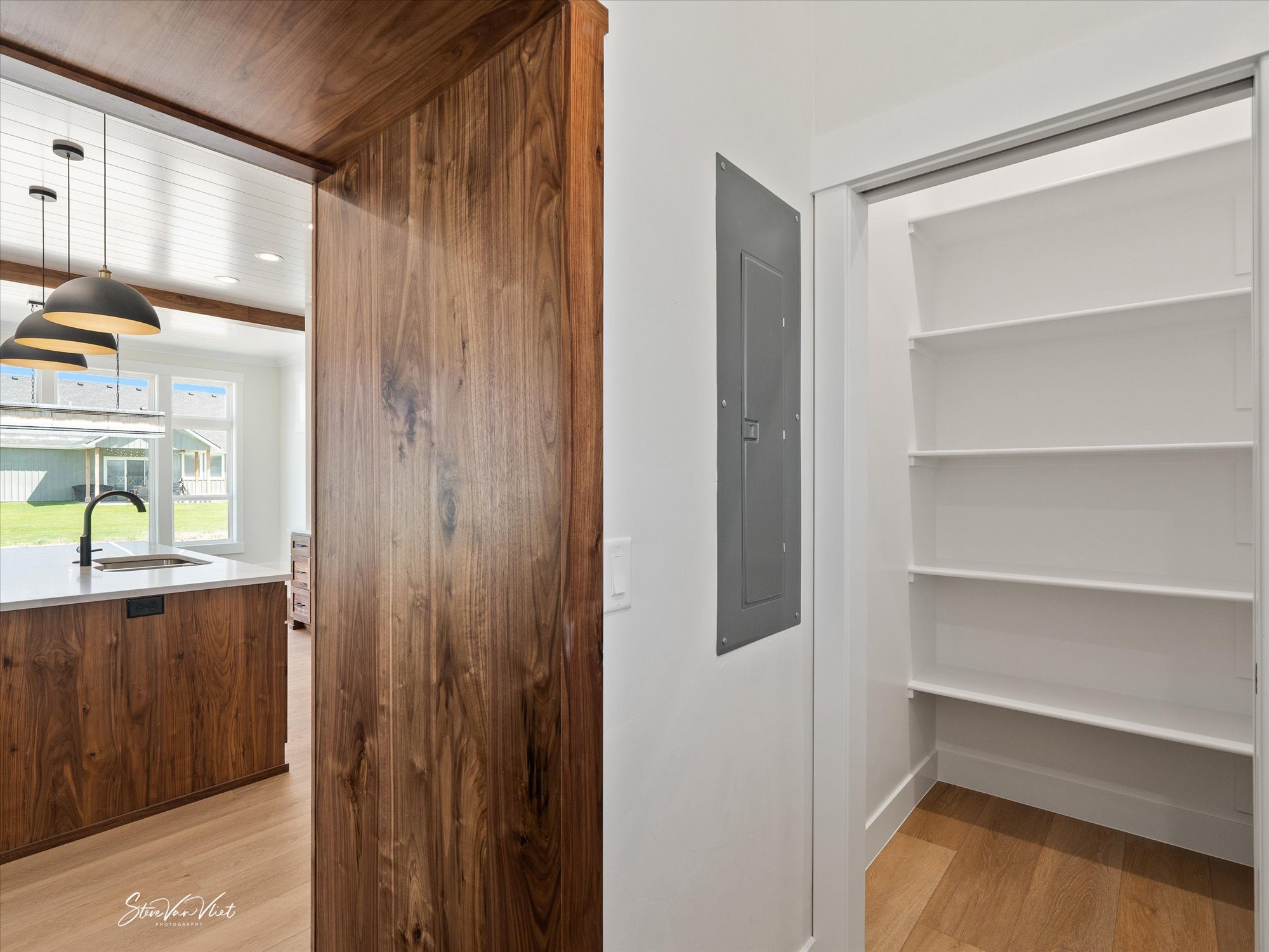
Flooring is one of the highest-impact decisions in any new home or remodel — and one of the easiest to get wrong. The wrong flooring for your household's lifestyle shows up fast: scratches from dogs, moisture damage in a bathroom, cold underfoot in a bedroom, or a product that simply doesn't hold up to kids and foot traffic the way the showroom sample suggested it would.
This guide cuts through the marketing and gives you a practical framework for picking flooring that fits your home, your life, and your budget.
Start With the Room, Not the Product
Every room in a home has different demands on its flooring. Before you look at a single sample, ask these questions for each space:
- How much moisture exposure is there? Bathrooms, laundry rooms, and mudrooms see water regularly. Kitchens see spills. Basements can have humidity issues. Some flooring products handle moisture well; others don't.
- How much foot traffic does this room get? A formal dining room used twice a week is different from a kitchen that's the center of family life from 6am to 10pm.
- Are there pets or young kids? Claws and toys scratch floors. Some products hide scratches better than others; some are hardened specifically for pet households.
- What's the subfloor situation? Concrete slabs require different products than wood subfloors. Some products can't go below grade (in basements). Your installer needs to know the subfloor condition before anything is selected.
Hardwood: The Gold Standard With Real Limitations
Solid hardwood is the most desirable flooring product for good reason — it's beautiful, adds genuine resale value, and can be sanded and refinished multiple times over its lifetime. A well-maintained hardwood floor in a living room or bedroom can last 80–100 years.
The limitations are real, though. Solid hardwood cannot be installed below grade (no basements) and doesn't handle moisture well — it expands and contracts with humidity changes, which is significant in Idaho where interior humidity swings considerably between summer and winter. In wet rooms like bathrooms or mudrooms, solid hardwood is the wrong product entirely.
Engineered hardwood addresses some of these issues — it has a real wood veneer over a plywood core that's more dimensionally stable — but it can only be refinished a limited number of times and is still vulnerable to standing water.
Best for: Main living areas, bedrooms, dining rooms in climate-controlled spaces. Avoid in: Bathrooms, laundry rooms, basements, mudrooms.
Luxury Vinyl Plank (LVP): The Practical Workhorse
LVP has taken over a huge share of the flooring market over the past decade, and for good reason. Quality LVP is 100% waterproof, highly durable, comfortable underfoot, and available in convincing wood and stone looks. It can go anywhere in a home, including basements and bathrooms. It handles pet claws, kids, and high foot traffic well.
The trade-offs: LVP cannot be refinished — when it wears out or gets significantly damaged, you replace it. It doesn't add the same resale cachet as real hardwood. And cheap LVP looks cheap; there's a meaningful quality gap between budget and mid-tier products that shows in thickness, texture, and how realistic the visual looks.
For most active family households in southeastern Idaho, mid-to-high quality LVP is the best value flooring available. It performs everywhere solid hardwood can't and competes well in the rooms where it could.
Best for: Kitchens, bathrooms, mudrooms, basements, any high-traffic area. Avoid: Only budget-tier products — the quality difference is real.
Tile: Unmatched in Wet Areas
Porcelain and ceramic tile is the right answer for bathrooms, shower floors and walls, and laundry rooms. It's completely waterproof, extremely durable, and easy to clean. Large-format tile (24x24 or larger) in main living areas has also become popular for its clean, modern look.
The downsides: tile is cold and hard underfoot (relevant in Idaho winters), installation is labor-intensive and therefore expensive relative to other products, and grout lines require periodic maintenance. Tile also doesn't forgive an uneven subfloor — proper prep is essential or tiles will crack.
Best for: Bathrooms, showers, laundry rooms, mudroom entries. Consider also: Kitchen floors, covered outdoor spaces.
Laminate: Budget-Conscious With Real Limits
Laminate flooring offers a wood look at a lower price point than hardwood or quality LVP. It's harder than many hardwoods and resists scratches well. The significant limitation is moisture: most laminate swells and warps when it gets wet, which makes it a poor choice for kitchens, bathrooms, or any room that sees moisture.
Waterproof laminate products exist but tend to narrow the price advantage over LVP. If budget is the primary driver and the room is dry, laminate is viable. But for most rooms, quality LVP at a similar price point will outperform and outlast it.
Best for: Dry bedrooms, offices, low-moisture living areas on a tight budget. Avoid in: Any room with moisture exposure.
What We Recommend for Most Idaho Homes
For a practical, durable whole-home flooring strategy: quality LVP throughout the main living areas, kitchen, bathrooms, and basement; tile in showers and wet bath floors; and hardwood or engineered hardwood in bedrooms and formal spaces where moisture isn't a concern and you want the warmth and value of real wood.
This combination handles Idaho's climate, active family life, and provides a range of looks without betting everything on one product's limitations.